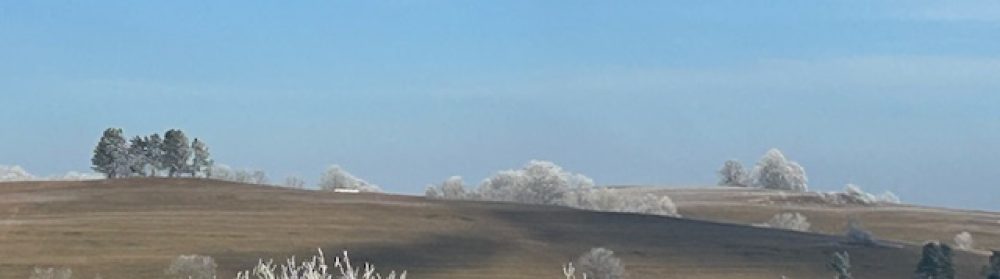
The Russian General Kutusow’s army is moving slowly through the village of Pratzen, situated on a hill that dominates the center of the battlefield. Impatiently he is giving orders to let them take marching positions for a possible enemy contact – against the directives of the battle plan that assumes that Napoleon’s troops are some kilometers away from Pratzen. Kutusow’s regiments are foreseen to move down to the foggy valley on their left to support the offensive on the left flank of the Austro-Russian forces. But he wants to wait longer. There is still dense fog in the valley in front of them, and it is not certain where the French are standing exactly. During the night French soldiers have been reported to be seen much closer to the Russian lines than they had assumed. Urging faster into the fog does not feel like the right thing to do. Just in that moment czar Alexander and the Austrian emperor Franz arrive on the spot. Alexander asks him why he did not give orders to his regiment to move forward.
What would you do in that situation?
Kutusow takes a considerable risk by opposing the czar’s wish and says he wants to wait longer. He even insists in a short conversation, referring to his responsibility for the troops and the success of the operation. Such a behavior towards the emperor was not at all usual at the time and seen as an offense, particularly in front of the allied Austrian emperor – even if it comes from the long-serving chief army commander Kutusow. But it is only a try: Kutusow gives in quickly as he sees that the czar does not change his mind. He turns back to the expected attitude of absolute loyalty and gives order to move down to the valley. His regiments disappear in the fog.
Only a few minutes later the French are starting a heavy attack towards the hill where Kutusow and the czar are standing, coming out of the fog on the right side. The height of Pratzen was the key position and the attack on that hill was the key move of Napoleon that decided the famous battle of Austerlitz in October 1805. By that meticulously prepared surprise move, Napoleon takes over the dominant hill in the center of the battlefield, cuts into the side of the Russian advance and splits the Russian and Austrian positions in the middle. Part of his tactics was to keep the surprise attack hidden in the morning fogs in the valley as long as possible – while he could perfectly observe the enemy’s moves on the hill. During the days before the battle, he had well observed at what time in the morning the fogs were starting to disappear. What Napoleon had thoroughly planned based on endless rides through the whole environment and based on careful observations and analysis, could only be guessed by Kutusow’s intuition as an experienced general. The plan’s of the monarchs Alexander and Franz were much more driven by optimism, arrogance and impatience for a success against Napoleon than based on investigations and facts about the French positions and tactical possibilities.
Tolstoj’s description of this encounter in his novel ‘War and Peace’ puts us into a very close and human perspective of the famous battle. He lets the reader experience the events only from the limited perspective of a few involved decision takers and supporting officers. And that gives an impressing insight of how it is to be in the middle of such a battle – and how limited the view and the options of single individuals are – let them be soldiers, officers or generals. What the reader gets from the next pages is not the well sorted sequence of attacks, counterattacks, successes and failures from an all-knowing distant perspective. The reader just sees, what the officers see: Suddenly the French are there and a lot is going wrong on the hill of Pratzen, while everybody is fighting and struggling at his very best. We follow the commander in chief and his officers trying to understand what is going on and how they can get the situation back under control. And while they are fighting bravely, we witness how they slowly discover that the whole battle is lost already before they even had a chance to understand what is happening to the battle as a whole.
A narrow, ‘siloed’ view reduces options to act
The officers can only see their corner of the battlefield – a road, a hill, a village, shooting and dying. And they only know what their orders are for their unit – as long as there is somebody to give orders. They are trying to turn the battle to the good with bravery and decisive action, but their possibilities are limited to what they can see: Their narrow section of responsibility, without an overview of the whole battlefield and without a base of information to see where their intervention would really help most. They can only defend and counterattack where they are standing. They are executing their task, being blind for the overall battle situation: They do not know what is going on somewhere else and if their movement, following the original orders, still makes sense in the actual situation.
No command, no action
Even the chief commander Kutusow and his generals find themselves lost in the middle of a situation that was not foreseen and that is no longer under their control. And while they let their officers fight fiercely to win the hill back, while they are throwing their elite cavalry reserves into total annihilation, they miss to abandon the whole original plan and to adjust positions and movements to the new situation – with this giving away their last options of avoiding a total defeat. While they lose the strategically important hill of Pratzen, there are large reserve units at the right wing, standing on the positions of their first quick wins, kilometers away from the center and without new orders, waiting until everything is too late. Their culture of hierarchy and orders makes it impossible to take own initiative that would go against the original battle plan – these generals are not used to take such responsibility. It is the job of the chief commander to take such decisions and so they send out a messenger. Until that cavalry officer has ridden along the many kilometers of battlefield to to find Kutusow or the czar for new orders, the disaster is already in full scale and everything is lost.
From the perspective of that messenger-officer the whole damage and desperate struggles of various units become visible along his ride, however he does not understand the causes of the disaster and does not draw conclusions for his own action (for example ride back and urge his general to act to support the center of the Austro-Russian lines). He does his duty and finally finds the csar. But Alexander is far retreated from his troops, obviously desperate and not with many options or much courage left. The officer decides that it is better to leave him alone, in order to not be the one officer who embarrasses the csar in his weak moment.
The result as history reports it: 15 000 Russian and Austrian soldiers have been shot into pieces during the battle or in the trap of their retreat between a narrow dam and the icy water of the lakes in their back – the French shooting with artillery from the conquered Pratzen height. 12 000 prisoners are taken and half of the Austro-Russian artillery cannons are conquered by the French (their metal was melted to a triumph-colon, today still standing on Place de la Concorde at Paris). With their armies destroyed the Austrian and Russian emperors can only bargain within Napoleon’s conditions: Russia must accept to retreat from the war and France gains control over large parts of northern Italy. At the same time, this marks the end of the hundreds of years old German empire at that time.
Overall performance is not determined by individual efforts in execution
Had general Kutusow waited longer on the hill – we do not know if and what that would have changed to the outcome of the battle. Maybe it would have improved options for the allied armies? However what is more important to learn from this: Tolstojs impressive and consequent storytelling with these limited, subjective perspectives demonstrates how much human beings – like Kutusow and his generals and officers – are just a little function of the dependencies and rules of an organization and of a leadership system that had come up with a not good enough plan. We see the disaster happen through their eyes and we feel their desperation to change the whole situation from their position, with their limited insights. And we see how difficult it is to work against the culture and rules of management in that system. Why did Kutusow give in so quickly? Did he know that it was in vain to insist, because he had tried before? Did he, just like the rest of the generals, unconsciously rely too much on their superiority in numbers and artillery? Was it the arrogance of the experienced elite generals against the unorthodox newcomer Napoleon? Did he think that somebody else would know better and do the right things to avoid damage? Did he maybe just think that it can not turn out too bad, after all? Because the armies are too big, their nations too strong, the company too rich and the customers still patient?
What assumptions would you have made in that situation? Before knowing the outcome of the battle? (And please keep in mind that it is easy to analyze after seeing the result, but difficult while things are not yet decided).
What we can say (assuming that Tolstoj’s view of the story is true) is that Kutusow already went quite far in stretching his personal courage and career risks – if we take into account the culture and customs of a military organization at that time and the special situation: Alexander wanted to demonstrate strength and decisiveness in front of the Austrian emperor. If his view could help or not was fully depending on his personal courage and risk-taking. Nothing in the given culture of leadership supported the beneficial use of his objection and expert judgement, in contrary, such behaviour was punished directly. Kutusow’s advance created subtle, but powerful resistance and, at the end, was without any effect on decisions and outcomes.
Working within the given system and culture – or changing the system
What seems certain is that Alexander was an energetic and ambitious young emperor with modern ideas and a drive for success. He wanted to move and progress, take risks, be the active part – and not be seen as the waiting, hesitating, too careful man, who is not ready to seize the opportunity to beat Napoleon. Mind the similarities to what is seen as successful and modern ‘leadership’ today! Maybe Kutusow knew that beating this spirit and the system of hierarchy would not work. Maybe he simply did not see this as his purpose – just as so many ‘modern’ managers definitively do not see it and do not practice it today. If Alexander and Franz (the management) wants it like that – shall they get what they want…
What is also certain is that nobody was able to intervene in a way that stopped the disaster – even not the young and freshly spirited, smart officers who had not yet fully inhaled the principles of blind obedience and absolute loyalty in the hierarchy – these young men who were still much more pushed by the impulses of their very lively hearts and human instincts. Those of them who had access to the planning meetings of the generals on the days before found enough doubts and questions – but they did not raise them in front of their ‘top management’. Again, any similarities to modern organizations and the discrepancies between formal management meetings and informal lunch conversations are fully intended and important lessons.
Doesn’t that characterization of the czar, the officers and the generals very much sound like a characterization of a modern management team today? This situation is two centuries ago and we should think that the aristocratic culture and strict hierarchies of a military organization are not a good comparison case for today’s 21st century management and work culture. But unfortunately, in today’s modern enterprises we find a lot of the factors of failure that become visible in Tolstoj’s story and in historic research about Austerlitz.
How much are organizations today still being managed with principles from the past?
We have the dynamic, forward pushing top leaders who’s attention and focus are on the big overall strategic opportunities – not on doubts of order-executors. We have the senior-management layer who has made careers just for their special drive to generate quick results and quick action when the top leaders push for it. They are excellent in executing given tasks fast and against all doubts, counter-indications, resistance and changing circumstances – and they rely on their experience and resources to turn all weird (or brilliantly innovative) top management decisions into something that fits into their own old understanding and their existing systems of management and operation. And we have the middle layers of management who find themselves left in the resulting struggles, caught between reality and higher management top-down-plans, with a limited view of what is going on across the whole organization. They are trying to make their career and success by pushing through what can be pushed, without objecting and making the best out of it instead where their influence works: Optimizing within their little piece.
Officer’s heroism
Some of them are even eager to face challenging situations to demonstrate their ad-hoc-hero-skills in front of their seniors. Just as the young Russian officers who were happy to finally lead a risky attack in a threatening situation – to show off their skills and heroic leadership. Some of these managers fall in the battles, but most of them survive because the price is paid somewhere else: At Austerlitz in the ranks of 12000 soldiers that died on the field. In modern organizations at the work execution level with very difficult work situations (e.g. complicated, ineffective processes) and in form of less value and higher cost for the customer and last but not least by a creeping destruction of their personal integrity. An acceptable way of living and surviving? Acceptable because it is without alternative? You might want to go with that story, but where will you end up with it? I think there is a better way.
What modern businesses and management systems do not have and why we do not hear the stories about the spectacular management defeats, is the body count. Seriously: There is no count of bodies and lost cannons for executed tasks. In most of these tasks or projects an objective measurement is missing that would show if the purpose is reached. There are just other managers from other, far away corners in the organization, like controlling for example, who start to make pressure, because there are issues and risks around the overall results. And of course this traditional management can always tell what the costs are and how many resources are used (which is, in comparison, counting the shot ammunition and kilometers run by each battalion at Austerlitz). If wrong decisions and not well investigated ‘solutions’ killed people in organizations, many of them would have extinguished themselves much faster than it takes to slowly but constantly ruin a company – by loosing too many of their customers (which is the corresponding final body count that nobody can disclaim or paint green any more at the end).
However, what drove the Austro-Russian army into disastrous defeat are not the performance or failure of single officers, generals and soldiers. They were doing their best – and many died on that day. It is the wisdom, effort and patience of investigating, planning and debating their plans and questioning own assumptions that were missing. And it is the culture of a strict hierarchical system, where in case of doubt the emperor is always right and questioning his views and wishes is an disloyal and cheeky treachery. And last but not least, it is a lack of humility on Austrian side that their decisions and way of warfare (their way of managing and driving a business) has already failed several times against the new competition named ‘Napoleon’ (shortly before at the southern-German town of Ulm, for example) and that consequently their logic and ideas might not be the best choice for this battle. This last observation is one of the most important, because usually in management that insight seems to be the most difficult for today’s managers, too.
So, after all, if Kutusow had stayed there on that hill longer with his regiments and if it had made a real difference to Europe – we will never know. The point that counts here is that you do not want to make your own possibilities and success dependent on the mistakes and weakness of the opponent or on pure chance of a hazardous choice of one general about waiting 10 minutes more or less – and that he has to make that choice against all rules of the established system.
The typical misbelief and misperception that blocks large organizations from changing and improving their setup is that it is seen as normal and ok that success or failure would mostly depend on the skills and efforts of single actors, especially single managers during ‘the battle’. And that in case of big problems there would still be time and options to act in heroic bravery to stop the disaster. What Tolstojs choice of perspective nicely shows is that in reality the reality (conditions and events) changes so fast and on such a large scale that managers in a traditional management system are simply too limited in their view and possibilities to see it and stop it. They are lost and over-stressed in the middle of a dynamics that they will only have understood well enough when its effects become obvious and when it is too late: When the damage is so big that they can no longer interpret it as normal losses on the right way to victory: Batallions being annihilated (large projects fail or stagnate dangerously), whole armies on flight (distrust, resistance, frustration, the best are leaving), chaos, key victims (reorganizations, managers must dismiss, whole market segments are lost to the competition). However, the signs are there long before: A lack of transparency, unclear responsibilities (nobody takes responsibility, or only for his small piece, not feeling accountable for the overall battle-outcome), missing information, missing or difficult coordination, unexpected difficulties (small and large customer escalations, delays, cost too high, revenue too low or too slow). But only when we count the bodies or the many lost customers of our business we finally see what really happens and then start quick action in panic – or simply run away to save our own individual careers and options.
Ignoring slowly growing disasters and their current and future, hidden body count
In traditionally lead enterprises, by the way, this blindness of failure can go on on for months and years from the first point where customers have clearly said that things are not ok for them. It can go on for so long because these traditional management systems just do not see and understand how bad it really is – because the traditional measurement systems show all green lights on the wrong KPI and the traditional management culture does not reward problem surfacing, uncomfortable questions objections. It is a bit as if the generals of an army would just watch the count of shooting and running in the fog and would conclude: There is great action going on, we are successful and – of course – moving forward into the right direction. Traditional KPI show the numbers, use and cost of resources and achievements of goals that refer to single pieces of delivery – they are not designed to show if the whole delivery works as needed and not how much and how well customer value is met. With the wrong measurements, top management just does not see how much is working in the wrong way for a long time already. The whole damage just becomes obvious when the shooting and the running stops and the fog goes away: When just too many customers have left, too many to still be able to pretend that all the busy activity in the busy business of task execution and goal-achievement would lead to the right direction. Unfortunately, most of today’s managers do not even know that they are running blindly. They think this is the way to successfully manage a business. They are really doing their best. They simply do not know better. And most of them, unfortunately are simply also just not listening to new, uncomfortable voices.
Mind the invisible surprise attacks of reality and markets: In some organizations it has taken as few as 4 months from the first customer losses to the complete bankruptcy of the enterprise (see Digital Equipment). Time to take choices and to listen to uncomfortable questions is long before the battle is turning towards defeat: It is while the armies are still there in full strength, in good positions and still well coordinated, with all options to change their marching plans.
Why do so many top managers and senior managers believe that they would have an overview and everything under control just because they have reports about the running and shooting (resources, cost, silo-outputs) and great nice plans of what they assume will work fine as a next quick action to improve or sell something? And I can only say again: They think this is the way to successfully manage a business. They are really doing their best. They simply do not know better. Those few who see the difference must go and show them alternatives that work better. Or at least point to the obvious problems in their way of acting, managing and seeing reality and start a conversation about where that leads and where we would like to end up instead. And what choices we have to make to turn the battle to our advantage.
 see lead change